This guide is for travellers planning a winter expedition. It has two parts: things to do in winter, and travel conditions month by month.
Things to do in winter
Winter in Mongolia offers experiences that don’t exist in summer. The rivers freeze solid. Snow leopards come down from high altitudes to find food. Nomads wear their thickest traditional clothing. And the winter festivals celebrate resilience and heritage.
Winter festivals
Festivals break the silence of the long, cold months, bringing nomadic communities together for games and trading. They’re authentic cultural events with a lot of local involvement.
Khövsgöl Ice Festival
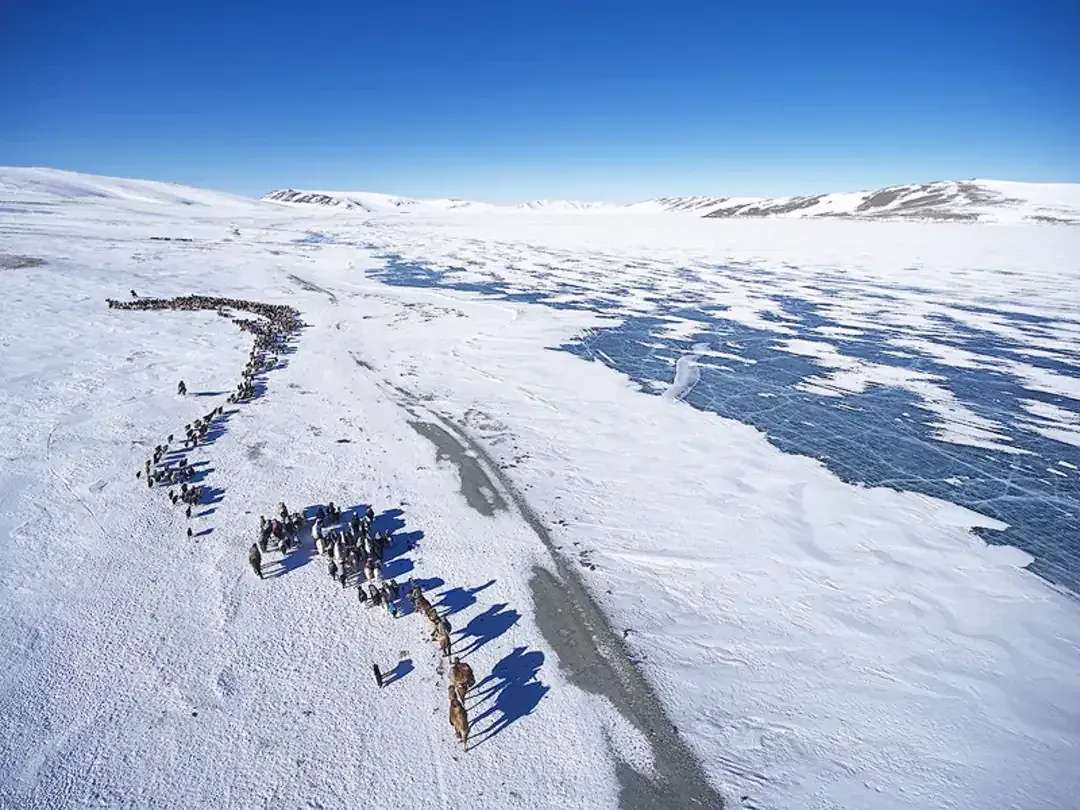
Lake Khövsgöl, in the northern province, is Mongolia’s largest freshwater lake by volume. By early March it is frozen solid, with ice often more than a metre thick: a massive stage for the Ice Festival, usually held in the first week of March.
The frozen surface has deep cobalt cracks and dramatic ice waves. You can watch horse-drawn sleigh races across the ice, and locals competing in ice wrestling, tug-of-war and other traditional games. There’s an international skating marathon, ice sculptures, and shamanic offering ceremonies on the ice. You can also meet the Tsaatan, Mongolia’s traditional reindeer herders, who travel down from the northern taiga for the event.
Thousand Camel Festival
Held in the Gobi Desert in late February or early March, this festival celebrates the endangered Bactrian camel, vital to nomadic life in the harsh desert.
Hundreds of herders parade together on decorated camels. Watch high-speed camel races across the dusty, snowy steppe, camel polo, beauty and strength contests, and loading and packing challenges, with traditional music, dance and throat singing.
Tsagaan Sar (Lunar New Year)
Tsagaan Sar, the “White Month”, usually falls between late January and early March. It celebrates the end of the harsh winter and welcomes spring.
It’s a family holiday lasting at least three days. Nomad families prepare their homes carefully and make hundreds, sometimes thousands, of dumplings called buuz. Visits to relatives are a big part of the celebration, and visitors experience real hospitality: fermented mare’s milk, vodka and traditional pastries.
Spring Eagle Festival (Nauryz)
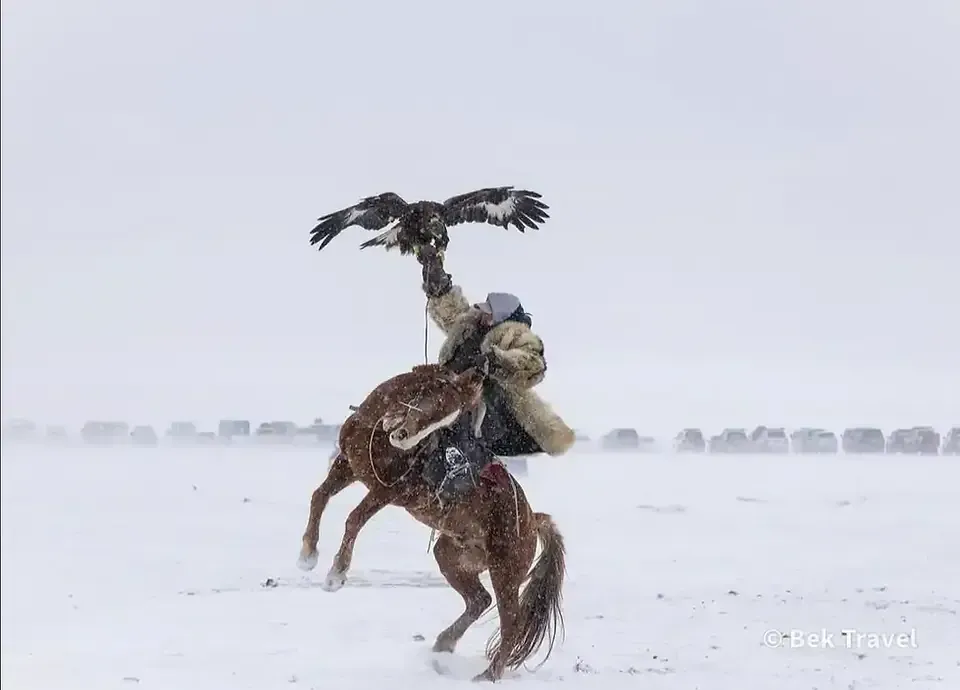
The Kazakhs of western Mongolia celebrate Nauryz, often with a local eagle festival. Eagle hunters show off the golden eagles they hunt foxes and hares with in winter, alongside traditional horse games like bushkashi, a fierce tug-of-war on horseback over a goat carcass.
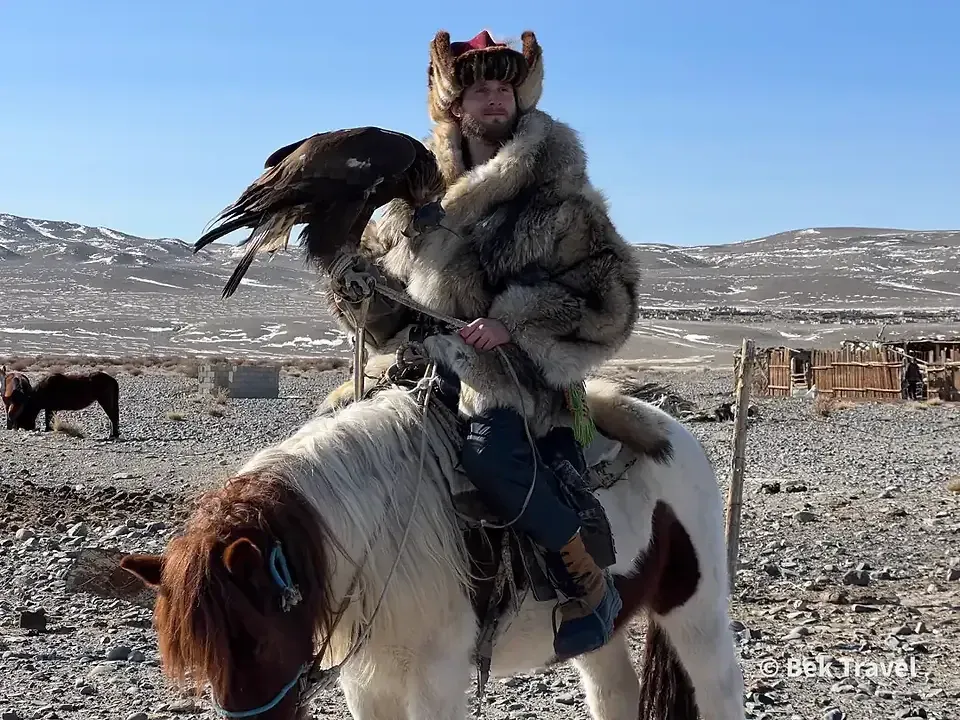
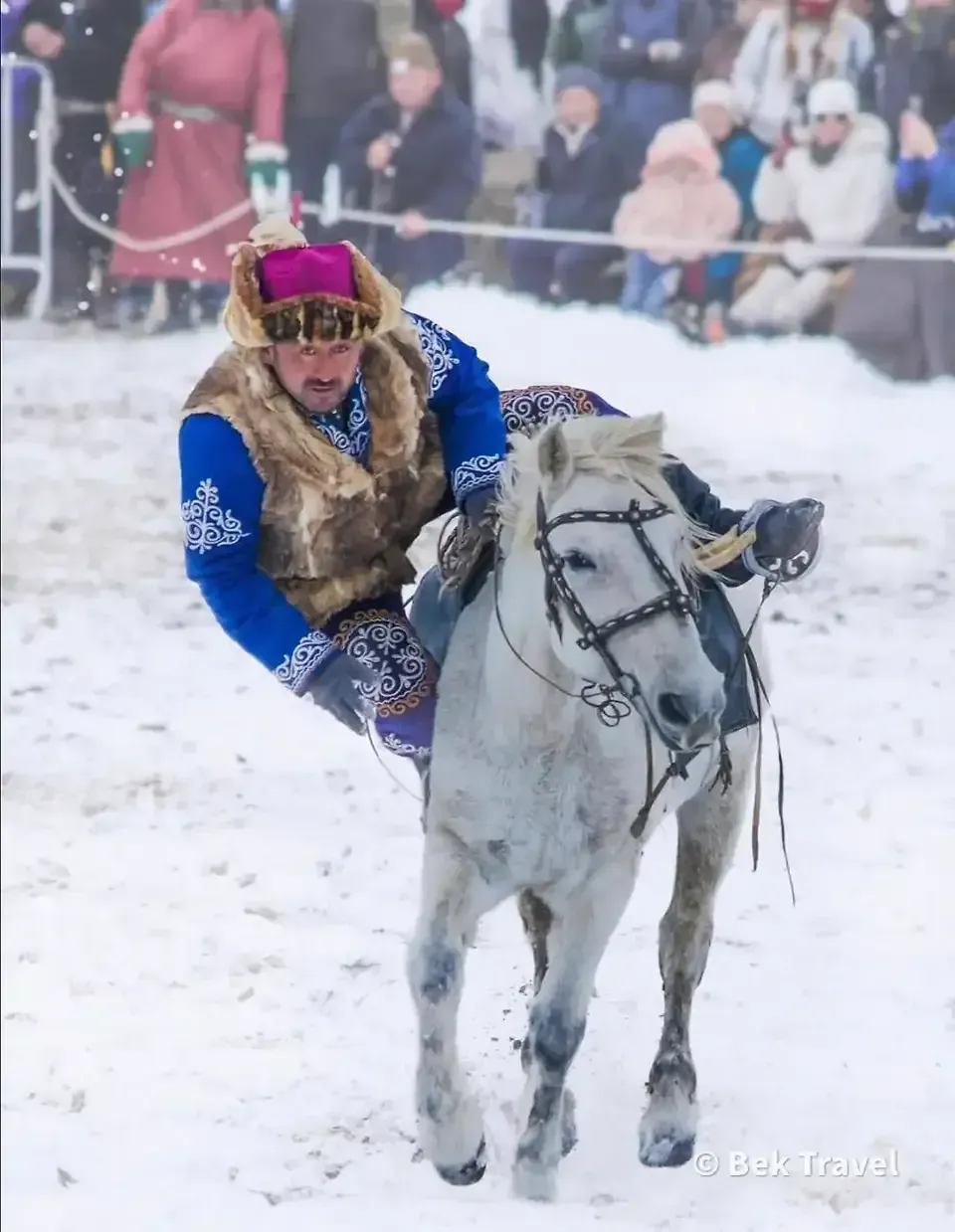
Eagle hunters in the West Mongolian winter
Silver Reeds and Winter Horse festivals
Smaller festivals happen across the country. The Silver Reeds Festival, in January or February at Khar Us Nuur in Khovd Province, celebrates local traditions, ice archery and winter sports. The Winter Horse Festival is held in Khentii Province.
Winter adventures
Dog sledding in Terelj
A popular winter activity near the capital, in Gorkhi-Terelj National Park. Tours run on frozen rivers and snowy valleys, and you can be a musher for the day, guiding a team of huskies across the ice. It usually runs from December to March, depending on safe ice and snow.
Horse riding in the snow
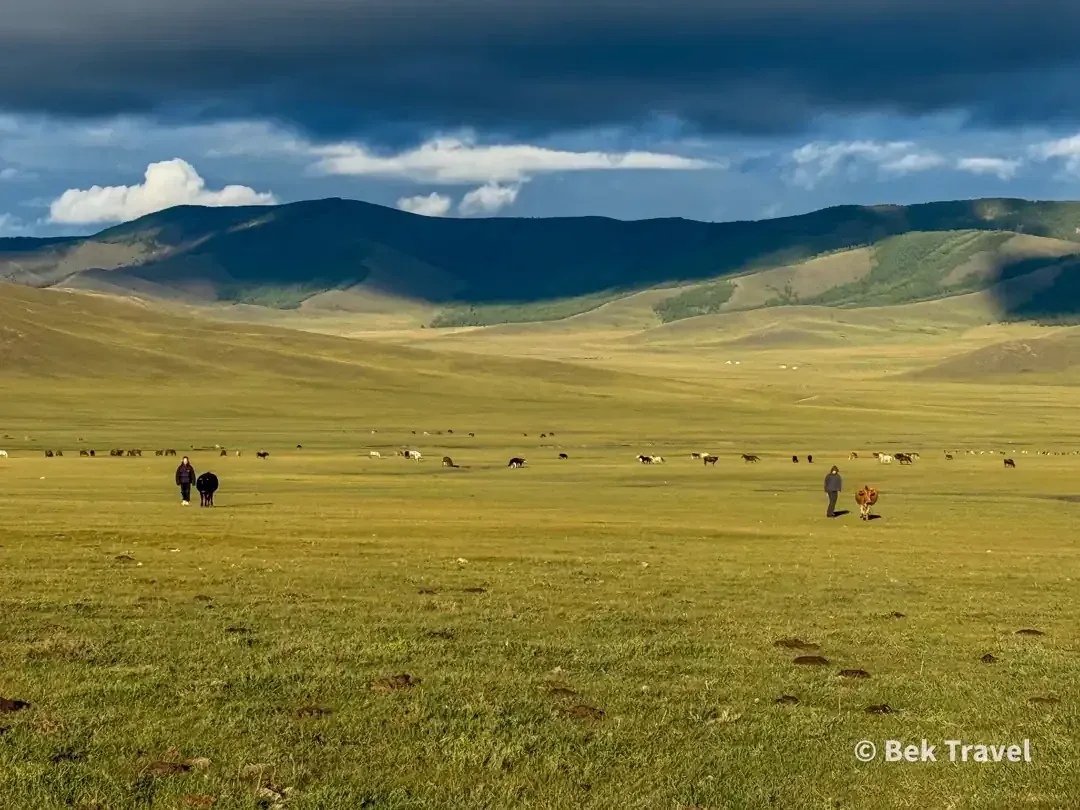
Riding in winter is a completely different experience. The snow softens the colours of the landscape, the steppe goes quiet, and there are very few other travellers. Short rides are best for beginners: sitting on a horse generates less body heat than hiking, so dress in extreme cold-weather gear. Mongolian horses are sturdy and well adapted to the cold.
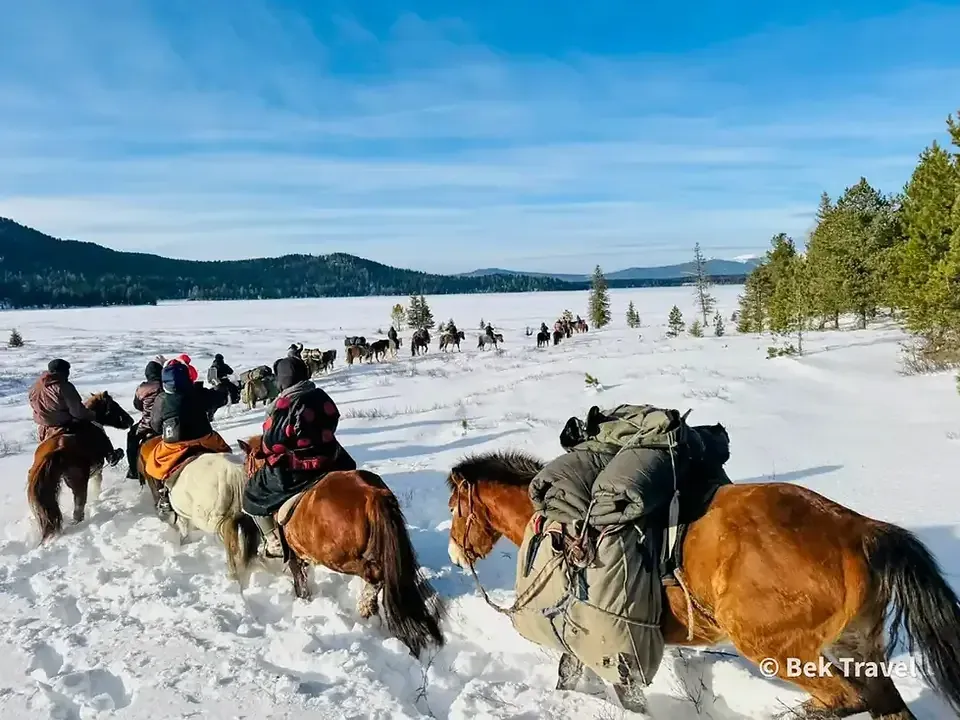
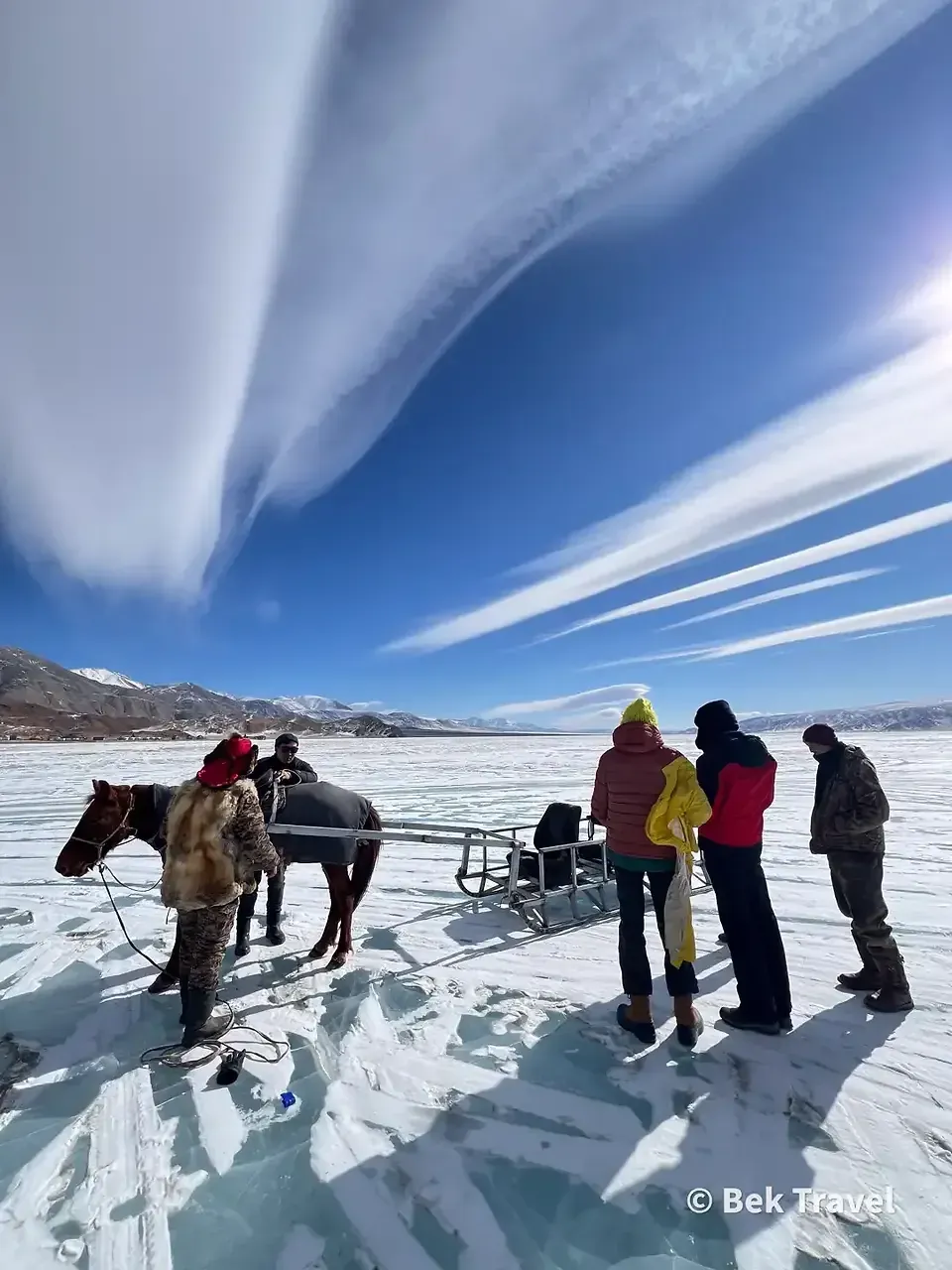
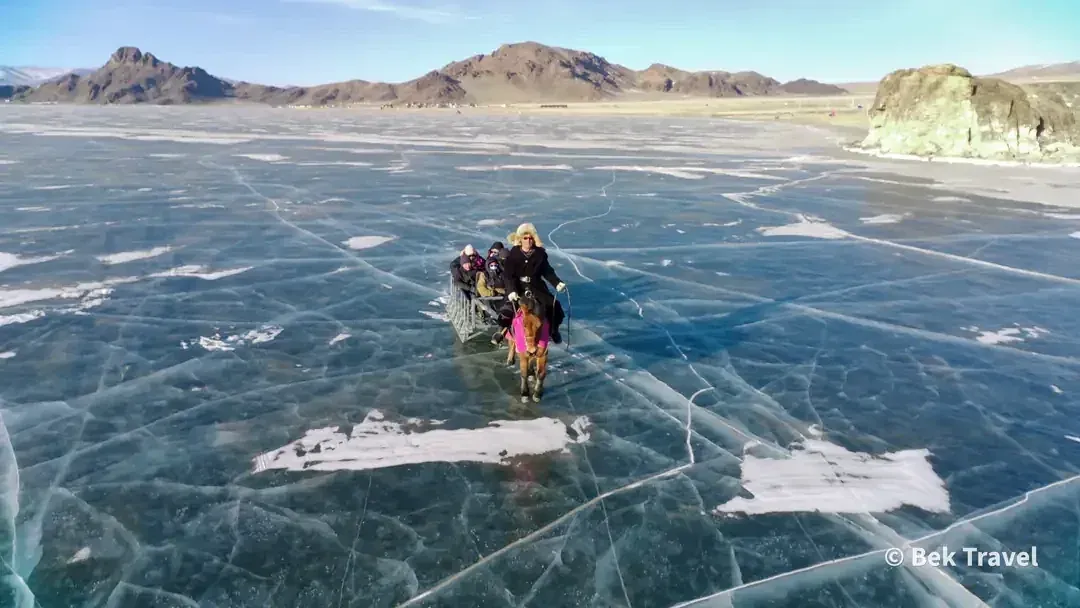
A winter horse trek, and a horse sled on frozen Khar Lake
Skiing, snowboarding and ice skating
Sky Resort, on the edge of Ulaanbaatar near Bogd Khan Mountain, has downhill skiing and snowboarding with rental equipment: an easy half-day activity. It also hosts winter events like ice climbing and sledding competitions. In the capital you can skate on the outdoor rink in Sükhbaatar Square, and locals slide around on the frozen Tuul River.
Searching for snow leopards
Spotting a snow leopard is rare and thrilling. Only about 6,500 of these big cats remain in the wild in Central Asia. Winter is the best time to see them, as deep snow forces them down from the high peaks to find food. Expeditions go to the high mountains of the Gobi Altai.
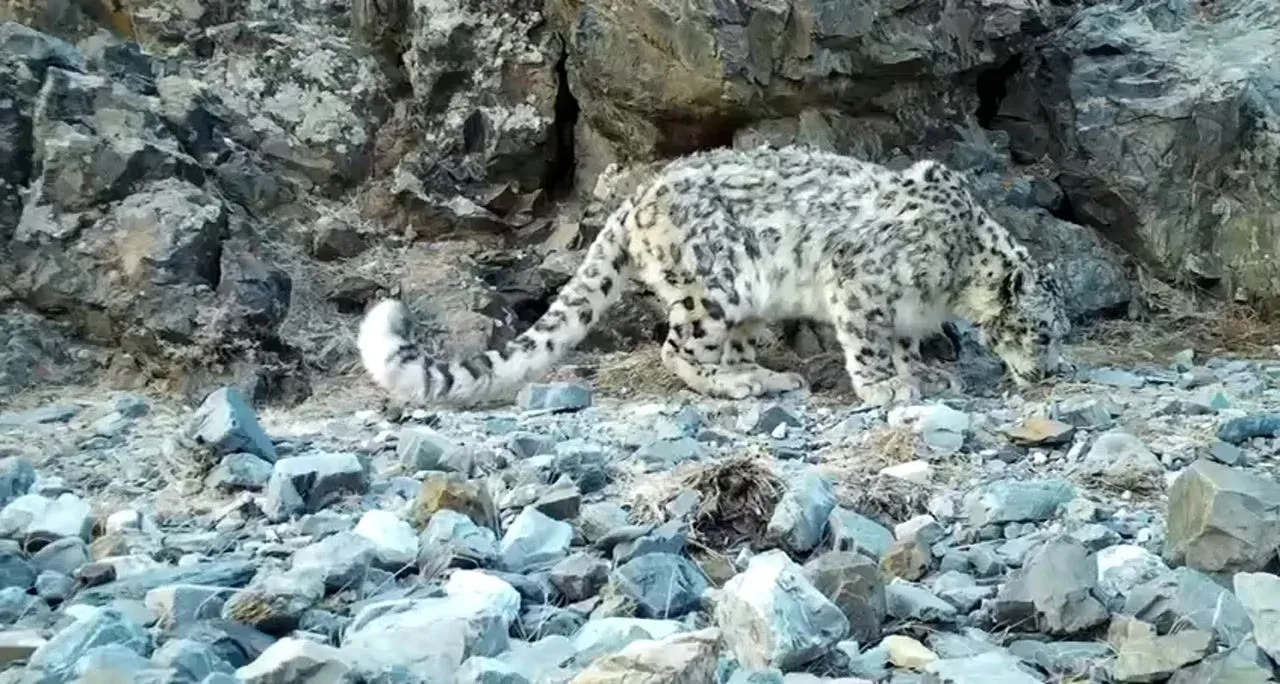
Join a snow leopard search. See our Snow Leopard Expedition.
National parks and historic sites
Mongolia’s historic sites stay open in winter, and the snow gives them a magical, isolated feel.
Gorkhi-Terelj National Park
About 60 km southeast of Ulaanbaatar, roughly a two-hour drive, with granite mountains, forests and frozen rivers. Its most famous landmark is Turtle Rock (Melkhii Khad), a huge granite boulder shaped exactly like a turtle.
You can also hike to the Aryabal Meditation Temple on a hillside: 108 stone steps lined with Buddhist proverbs on wooden signs, and a panoramic view of the snowy valley at the top.
Orkhon Valley and Karakorum
The Orkhon Valley is a UNESCO World Heritage site. Karakorum was once the capital of Genghis Khan’s empire; the Karakorum Museum shows artefacts from it. Nearby, Erdene Zuu is Mongolia’s oldest surviving Buddhist monastery, its stupas dramatic against the winter sky.
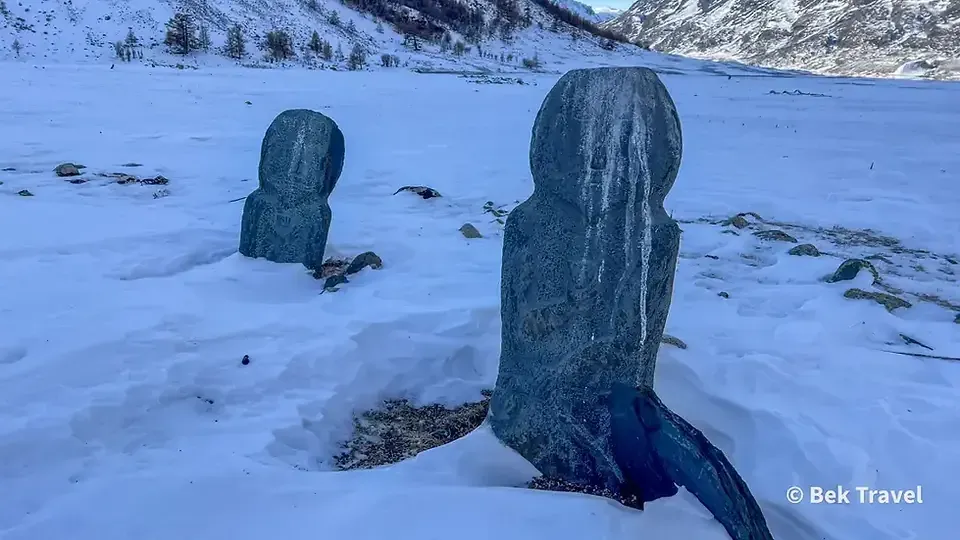
Further into the valley, the Khoid Tamir river holds ancient deer stones, carved megaliths thousands of years old, striking against the white snow. You can also see the ruins of Khar Balgas (Ordu Baliq), an ancient defensive structure.
Conditions by month
Winter in Mongolia is long, and conditions change a lot between November and April. Long-distance trekking is generally not possible, but day hikes and 4WD tours are very popular.
| Month | Day | Night | Travel conditions |
|---|---|---|---|
| November | −8 to 4 °C | −12 °C | Winter begins. Snow builds up and high passes close. Limited trekking. |
| December | −4 to −23 °C | −12 to −30 °C | Deep winter. Lakes begin to freeze, days are very short. Travel by 4WD only. |
| January | −12 to −18 °C | −20 to −28 °C | The coldest month. Can drop below −40 °C in the north. Proper cold gear is a must. Clear blue skies are common. |
| February | −10 to −18 °C | −20 to −25 °C | Extreme cold continues. Lunar New Year preparations begin. Everything stays frozen. |
| March | −8 °C | −14 to −16 °C | Festival season. The ice is at its thickest and days get longer. A few trails start to open. |
| April | 10 to 14 °C | 1 to 6 °C | Unpredictable weather. High winds and dust storms up to 140 km/h in the Gobi. Melting snow makes roads muddy. |
Planning a winter trip? We run winter tours in West and Central Mongolia. See our winter tours or talk to us.